Singapore's top restaurants buy their produce from local farmers; so should you
Advert
Experiences
Singapore's pinnacle restaurants buy their produce from local farmers; and then should you lot
From Quan Fa Organic Farm to Ah Hua Kelong, Singapore's farmers tell us how they are growing their businesses despite obstacles such as the lack of manpower and natural resources, and how Singaporeans can contribute towards turning their tides.
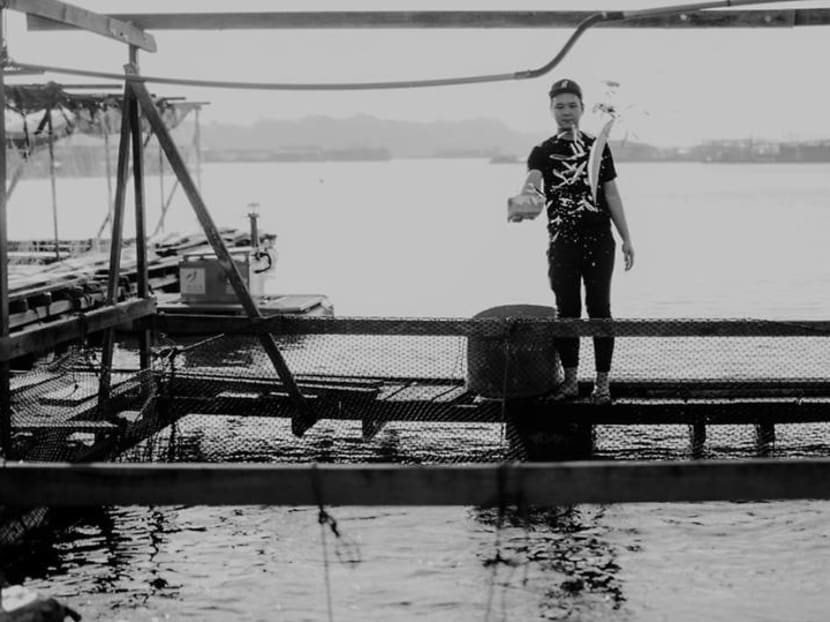
Managing managing director Wong Jing Kai is determined to expand Ah Hua Kelong's business, while raising awareness most the merits of fresh, locally grown seafood. (Photo: Pixioo/Samuel Ng)
04 Nov 2022 06:30AM (Updated: 04 Jul 2022 11:52PM)
It is the challenge of the ages: Growing and delivering fresh nutrient to Singapore'due south e'er-growing population with the limited land nosotros possess. Notwithstanding farming is a calling that a small group of individuals have taken up. Never listen the lack of land, natural resources and manpower. These things have never stopped our farmers, whose passion lies in growing nutrient for the country.
Accept Liao Chuan Huat, who established Quan Fa vegetable farm in 1999 with the unproblematic goal of feeding his family unit amend. Certified organic the following year, Liao grew his crops and so that he was able to sell vegetables to Singaporeans who made the trek to his farm in the Lim Chu Kang surface area just to buy them.
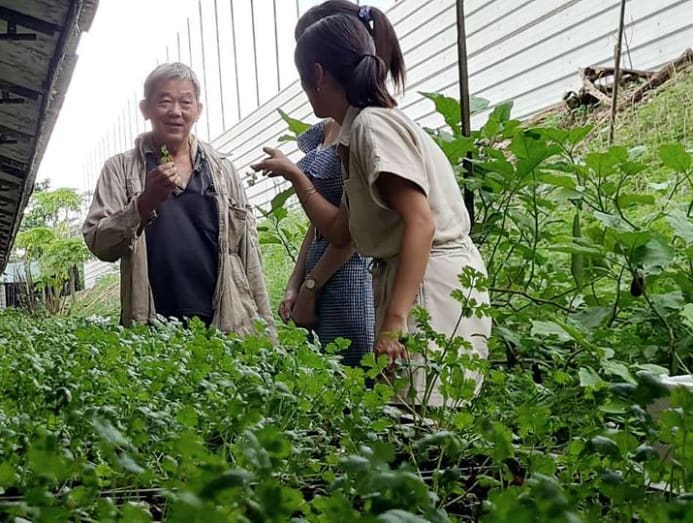
In 2008, Liao's son Jun Jie joined the growing family concern and took his father's produce to moisture markets, supermarkets, and to consumers online.
Quan Fa Organic Farm'south growth was well on track, relieve for 1 snag: Final yr, it lost its two-hectare plot as its lease came to an end. It moved to its electric current plot at Neo Tiew which, at almost iv,500 sq. ft., is merely a quarter of the size of its sometime plot. Production dipped accordingly and it now imports vegetables from Thailand, Australia and Cameron Highlands to sustain and grow its business organization.
When the COVID-19 pandemic hit earlier this year, it took yet another price on the business organization every bit border restrictions curtailed the supply concatenation.
"It was frustrating," said Quan Fa'due south marketing manager Lays Poh. "The upside was that there was demand, but just not enough supply." Undaunted, the visitor wrote a proposal to the Singapore Food Agency, detailing this simple economics tenet in a bid to secure the plot that sits beside information technology at present.
"If we get it, it means nosotros can produce more. But nosotros will never become back to the same infinite that we had earlier," said Poh.

READ> The Cameron Highlands farmers supplying upstanding, organic produce to Singapore
HOME TO ROOST
Toh Thye San Subcontract, too, began equally a small family unit business organization. Though it was incorporated in 1979, its eponymous founder had been plying his merchandise every bit a chicken farmer who sold his fowl at wet markets for more than 20 years earlier that.
Today, Toh Thye San supplies ethically farmed chicken and other meats to supermarkets and Singapore's nutrient services industry, including loftier-stop restaurants such as Iggy's and Burnt Ends.
At present in its third generation, the family business organization has established farms in Malaysia to circumvent the issue of infinite, merely cites price and manpower as their main challenges. These it has side-stepped with automation – Toh Thye San Farm was amongst the offset poultry suppliers to automate its slaughtering process. Come up adjacent year, it volition movement into the new Singapore Poultry Hub, the get-go smart and light-green factory for the manufacture in Singapore.
A articulation venture with four other poultry companies – Kee Song Holdings, Sinmah Holdings, Tong Huat Poultry Processing Mill, and Tysan Nutrient – the Singapore Poultry Hub will help the farms increase productivity and achieve new economies of calibration.
"For example, instead of five slaughtering lines, we will all share i. And we volition take an automatic cutting line that cuts chickens into 8 or ix pieces (with less need for manpower)," said the company'due south head of projects Kenny Toh.
READ> Banyan Tree opens organic farm in Thailand with Michelin-starred chef
TEACH A Homo TO FISH
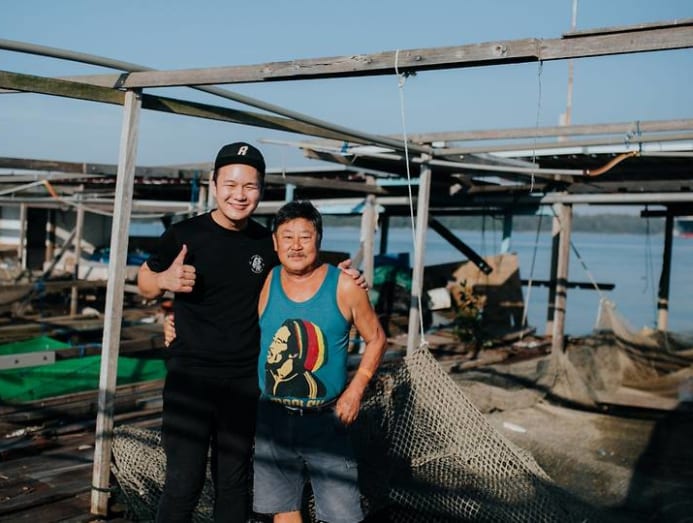
And then at that place is Wong Jing Kai, who is then passionate near fish farming – a so-called sunset industry – that he is looking to revive information technology for these modern times.
"I met (kelong owner) Ah Hua more than than 6 years ago and after chatting with him, realised that there are lots of gaps to be explored in this (fish farming) industry," said the 30-twelvemonth-old, who'southward now the company's managing director.
"What people considered a sunset industry wasn't that to me. It is merely considered a dusk industry because people don't want to exercise the work. Only there are and so many opportunities, such every bit the fact that at that place was no local seafood directly available to the public."

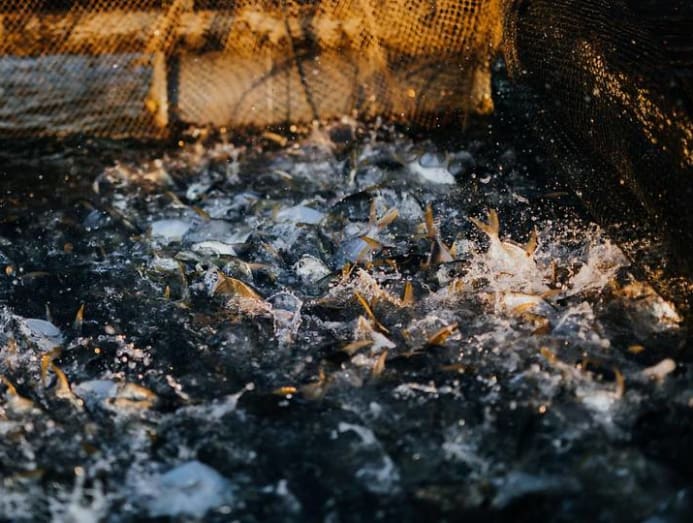
Equally Wong saw information technology, the all-time option was selling his seafood online at affordable rates. Today, Ah Hua Kelong sells its wares to Singaporeans on its website, complete with doorstep commitment, and supplies produce to restaurants like the Michelin-starred Labyrinth, which proudly state their provenance on the menus.
It also boasts its own restaurant, Scaled By Ah Hua Kelong and a franchise outlet Ah Hua Kelong @ Riang, which help to showcase and educate consumers near the farm'southward produce such as locally grown mussels and crabs.
His goal is to at present expand Ah Hua Kelong, while raising awareness nigh the claim of fresh, locally grown seafood. Next on Wong's agenda is harnessing technology to update the farm and business organization.
"Only to exercise that, nosotros need sales. We've tried to put in modest things where nosotros can. Nosotros've brought in solar panels so that we can reduce the oil usage to run the generator. I'm now looking into death rates and survivability – the more the fish survive, the more than nosotros tin can sell," he said. "I'm likewise trying to go our farms certified sustainable."
READ> Fish soup, sambal octopus: Local dishes go a artistic spin at this new eatery
GROWING A NATIONAL GARDEN
A pioneer in Singapore'southward urban farming landscape, Edible Garden City has been key to the rising awareness of local produce among Singaporeans. Since its inception in 2012, it has championed the Abound Your Own Nutrient movement by first helping people grow edible gardens in their homes and workplaces.
Today, information technology boasts iii production farms in Queenstown, Raffles City Shopping Centre and Funan, where information technology grows up to 50 varieties of vegetables, fruit and edible flowers for restaurants and households.
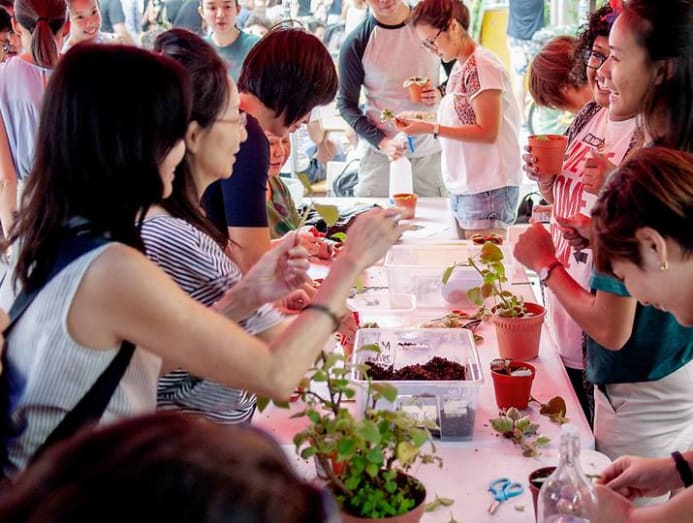
"While Edible Garden City began with the concern of edible landscaping, nosotros have over the years understood the importance of a diversified business concern model that focuses not but on nutrient product, but that as well actively aims to build awareness of local farming in Singapore," said a spokesperson for the company.
"Hence, besides growing food and building gardens, over the years, we have expanded into offering tours and workshops, likewise equally growing kits and even lifestyle products."
READ> Celebrity chef Rachel Khoo: Can eating a institute-based diet really save the earth?
SUPPORTING OUR LOCAL FARMERS
While Singapore at present imports 90 per cent of our food, Edible Garden Urban center is optimistic that we can accelerate food production to meet the state's "30 by 30" goal (i.east. produce 30 percent of our country'south nutritional needs by 2030).
"Every Singaporean can do our part to help Singapore become more food resilient. These efforts are not limited to buying local produce. It could be past volunteering, talking about local producers or fifty-fifty patronising eateries that buy from local farmers," the spokesperson connected.
Quan Fa Organic Subcontract'southward Lays Poh added, "Singaporeans take this mindset that if it's imported, information technology must exist good. But we want Singaporeans to understand that with traditional farming practices like ours, you can see the source; the produce is harvested and sent straight to the market. Cargo freight takes well-nigh seven days from overseas, so the freshness just isn't there anymore. The government has to assistance raise awareness of this and back up the farmers as well."
"Self-sustainability is a very distant future for the states, especially if y'all look at (rearing) chickens," said Kenny Toh. "It's a very country-intensive industry and bears hygiene risks because of disease and water pollution. Perhaps it's possible with vegetables or seafood, merely it would require a lot of help from the government."
Ah Hua Kelong's Wong says that imported produce provides variety, but locals should consider Singapore-farmed produce as an pick more often. Equally he succinctly put it: "We should exist a source option, not a second choice."
READ> Bjorn Low: 'Every Singaporean tin assistance Singapore become more food resilient'

Contempo Searches
Trending Topics
robertsonlaterfur1965.blogspot.com
Source: https://cnalifestyle.channelnewsasia.com/experiences/singapore-farm-urban-farmers-suppliers-restaurants-247111
0 Response to "Singapore's top restaurants buy their produce from local farmers; so should you"
Post a Comment